Tags
Posted by
-
year PGDM program
-
Workshop
-
Top PGDM Colleges in India
-
Top Business Schools in India
-
Summer Research Internship Program (SRIP)
-
Summer Internship Program
-
Student Exchange Programs in PGDM
-
Student Exchange Eligibility
-
soft skills for placement
-
SLRI
-
skills for campus placement
-
SEE Learning
-
Regular PGDM
-
QS Rankings
-
Python for Data Analysis
-
Project
-
professional courses after graduation
-
Pre-Placement Offer (PPO)
-
Power BI vs Tableau
-
Postgraduate Diploma in Management
-
placements
-
placement tips for students
-
Placement
-
phd
-
PGDM with Dual Specialization
-
PGDM vs Executive MBA
-
PGDM syllabus
-
PGDM specializations
-
PGDM Specialization
-
PGDM placements
-
PGDM in Data Analytics
-
PGDM in Banking
-
PGDM full form
-
PGDM For Working Professionals
-
PGDM eligibility
-
PGDM Courses
-
PGDM course duration
-
PGDM course details
-
PGDM course
-
PGDM Career Switch
-
PGDM Career Scope
-
PGDM Career Opportunities
-
pgdm bda
-
PGDM Banking and Finance
-
PGDM After Graduation
-
PGDM admission
-
PGDM
-
Opportunities
-
Online PGDM vs Regular PGDM
-
Online PGDM
-
nova sbe
-
MDP
-
MBA vs PGDM
-
MBA in Data Analytics
-
Marketing
-
Management Courses
-
Management Colleges in India
-
JAIIB certification
-
Investment Banking Career
-
International Student Exchange
-
Insurance Jobs in India
-
Insurance Career Growth
-
IDA
-
HCM
-
Goa Institute of Management
-
Global Exposure in PGDM
-
GiveGoa
-
GIM Alumni
-
GIM
-
FRM certification
-
fpm non residential
-
Fpm
-
Finance Management Course
-
Finance Jobs
-
Finance Career Options
-
Executive MBA
-
Executive fpm
-
Event
-
est courses after graduation in India
-
Dual Specialization PGDM
-
Dual Degree Programmes
-
Dual Country
-
Dr. Hanish Rajpal
-
Doctoral
-
Data Science Career
-
Data Science
-
Data Analytics PGDM
-
Data Analytics Careers
-
Data Analytics
-
CSSA
-
CPPG
-
courses after graduation for high salary
-
courses after graduation
-
Corporate Finance Jobs
-
Convocation
-
Conference
-
Co-LIFE
-
Clubs
-
CHSDM
-
Career Switch After Graduation
-
Career Opportunities in Banking and Finance
-
Career in Data Analytics
-
Career After PGDM
-
campus placement preparation
-
Campus Placement
-
Business Analytics vs Data Science
-
Business Analytics Tools
-
Business Analytics
-
Big Data Analytics
-
BIFS
-
BFSI Career Opportunities
-
Best PGDM Colleges India
-
Best PGDM Colleges in India
-
Banking vs Insurance Salary
-
Banking vs Insurance Career
-
Banking Jobs in India
-
Banking courses after graduation
-
Banking certification courses
-
Banking Career Growth
-
Banking and finance courses
-
Banking and Finance Course
-
Alumni Success Stories
-
Alumni Reunions
-
Alumni Relations
-
Alumni Office
-
Alumni meet
-
Alumni Impact
-
Alumni Events
-
Alumni Engagement
-
Alumni
-
AIM2Flourish
-
Admissions
-
achievement
-
6. Career Growth After PGDM
-
2 year PGDM program
-
1 year vs 2 year PGDM
-
#pgdm
-
#mba
Date
When Literature Teaches Leadership: Inside GIM’s “Wisdom from Words” Seminar
Share this blog


What if some of the most enduring leadership lessons didn’t come only from case studies or balance sheets—but from poetry, epics, novels, and plays as well?
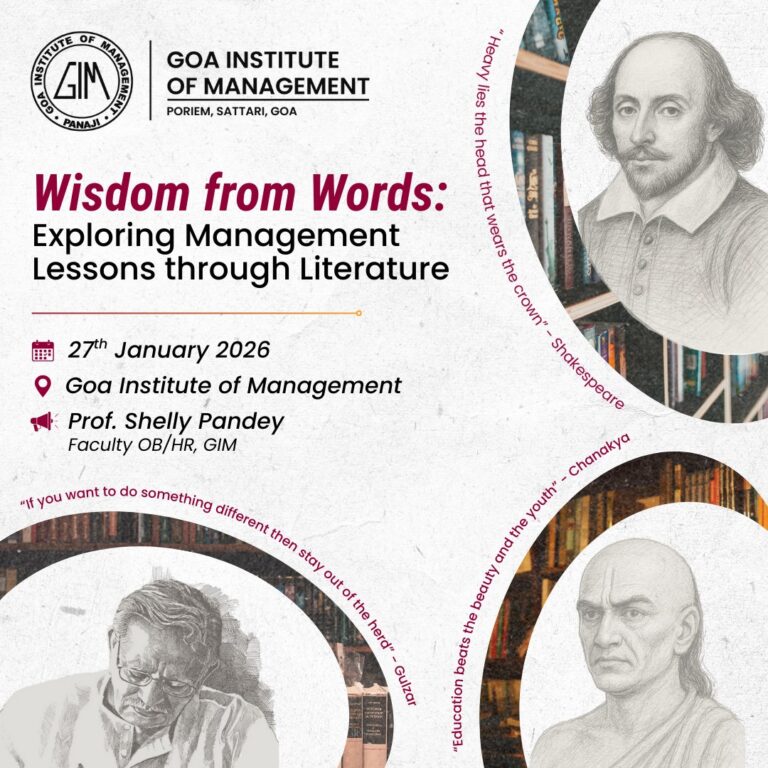
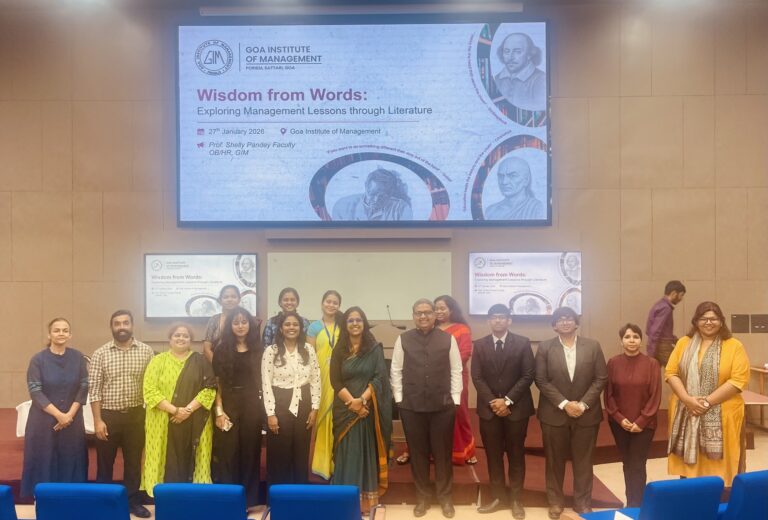
On 27 January 2026, Goa Institute of Management hosted a one-day interdisciplinary academic seminar titled "Wisdom from Words: Exploring Management Lessons through Literature.“ Convened by Dr. Shelly Pandey the seminar brought together scholars, practitioners, and students to explore an unconventional yet deeply relevant proposition: that literature—across cultures, languages, and eras—offers some of the most profound insights into leadership, ethics, power, care, and responsibility.

"Stories teach what Strategies cannot"
Dr. Shelly Pandey
Chair - Organisational Behaviour & Human Resource Management (GIM)
Why Literature?
The premise was simple yet radical. Literary narratives—whether drawn from the Mahabharata, Shakespeare, Gulzar, Kafka, or children’s literature—offer simulated worlds where leaders can safely encounter moral dilemmas, failures, power struggles, and ethical ambiguity. These narratives, speakers argued, help cultivate reflexive, emotionally intelligent, and ethically grounded leaders.
Ancient Wisdom, Contemporary Leadership
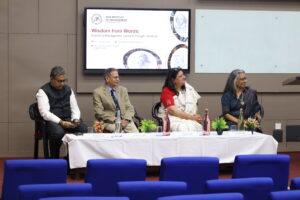
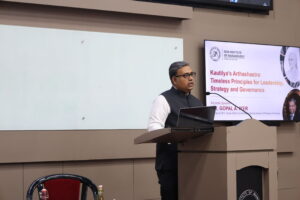
Several sessions demonstrated how ancient and classical texts continue to speak directly to modern organisational realities. Mr. Gopal Iyer (Founder & CEO of Career Shifts Consulting) revisited Kautilya’s Arthashastra, reframing it not as a Machiavellian manual but as a sophisticated text on ethical governance, accountability, and welfare-oriented leadership. His session underscored the relevance of Indian knowledge systems in addressing today’s complex stakeholder environments.
Similarly, Dr P. V. Radhika (Assistant Professor at Government Degree College, Andhra Pradesh) drew on Vidura’s counsel from the Mahabharata, highlighting truth-telling, moral courage, and ethical advisory leadership. Bridging mythology and modern corporate life. Mr. Akshat Kochar (GIM) connected themes of dharma and ambition from the Mahabharata to the Satyam scandal, offering an India-rooted ethical framework for understanding corporate collapse.
Adding a vernacular dimension, Ms. Rutuja Sahane (FPM scholar at GIM) highlighted Sant Sahitya as a repository of ethical, human-centric, and ecologically sensitive leadership wisdom—offering a powerful counterpoint to hyper-competitive management paradigms.
Leadership Lessons from Early Modern Shakespearean Literature
Drawing from Julius Caesar, Mr. Satish Pradhan (former Group Head of HR at the Tata Group) explored ambition as a double-edged sword, showing how moral absolutism, ego, and misreading intent can destabilise organisations. His insights resonated strongly with contemporary boardroom politics and succession challenges.
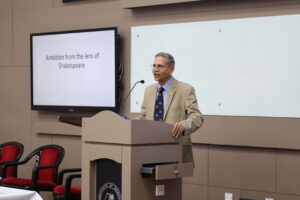
This exploration continued with Ms. Sahaya James (Assistant Professor at St Joseph College, Trichy), who examined leadership rise and ruin through Macbeth and Death of a Salesman, and Ms. Sneha Desai (Assistant Professor at Government College of Arts, Science and Commerce, Goa), who analysed authority and identity through Twelfth Night. Together, these sessions highlighted how toxic ambition and identity confusion remain timeless organisational risks.
Managing the Inner Life of Leaders
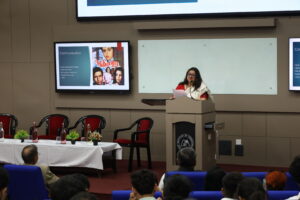
One of the most engaging sessions came from Dr. Saba M. Bashir (Assistant Professor at Jamia Millia Islamia), who explored leadership and life through the poetry of Gulzar. Her talk, “Aanewala pal, jaanewala hai”, reflected on impermanence, emotional labour, and adaptability—qualities often neglected in managerial discourse. By drawing from contemporary films familiar to students, she demonstrated how leadership relevance depends on flexibility and evolving with time.
In a similarly reflective vein, Dr. Annie Koshi (Principal of St Mary’s School) used Dr. Seuss’s children’s literature to unpack themes of empathy, inclusion, identity, and ethical becoming. Through short video narratives, her session reminded participants that some of the most powerful leadership lessons come from simplicity, imagination, and moral clarity.
Expanding the Boundaries of Management Thinking
Pushing the boundaries of conventional management discourse, Dr. Andy Silvera (Associate Professor at GIM) introduced queer hermeneutics as a lens to interrogate organisational norms. Framing organisations as spaces of hope, care, and hospitality, his session sparked rich discussion on inclusion, justice, and ethical leadership beyond efficiency metrics.
Ms. Manu Mahima (St. Stephen’s College, University of Delhi) used Kafka’s writings to critique bureaucratic alienation and moral disengagement, while Dr. Tara Saldanha (Assistant Professor at GIM), through Rohinton Mistry’s A Fine Balance, examined care work and precarity, challenging the notion of the “ideal worker” and calling for compassion-centred leadership models.
Key Takeaways: What the Seminar Revealed
The seminar reinforced that:
- Indian and vernacular knowledge systems offer rich, underutilised resources for management learning
- Interdisciplinary engagement strengthens critical thinking, cultural sensitivity, and ethical reasoning
-
Literature helps students navigate complexity, ambiguity, and moral tension—realities.