


Tags
Posted by
-
year PGDM program
-
Workshop
-
Top PGDM Colleges in India
-
Top Business Schools in India
-
Summer Research Internship Program (SRIP)
-
Summer Internship Program
-
Student Exchange Programs in PGDM
-
Student Exchange Eligibility
-
soft skills for placement
-
SLRI
-
skills for campus placement
-
SEE Learning
-
Regular PGDM
-
QS Rankings
-
Python for Data Analysis
-
Project
-
professional courses after graduation
-
Pre-Placement Offer (PPO)
-
Power BI vs Tableau
-
Postgraduate Diploma in Management
-
placements
-
placement tips for students
-
Placement
-
phd
-
PGDM with Dual Specialization
-
PGDM vs Executive MBA
-
PGDM syllabus
-
PGDM specializations
-
PGDM Specialization
-
PGDM placements
-
PGDM in Data Analytics
-
PGDM in Banking
-
PGDM full form
-
PGDM For Working Professionals
-
PGDM eligibility
-
PGDM Courses
-
PGDM course duration
-
PGDM course details
-
PGDM course
-
PGDM Career Switch
-
PGDM Career Scope
-
PGDM Career Opportunities
-
pgdm bda
-
PGDM Banking and Finance
-
PGDM After Graduation
-
PGDM admission
-
PGDM
-
Opportunities
-
Online PGDM vs Regular PGDM
-
Online PGDM
-
nova sbe
-
MDP
-
MBA vs PGDM
-
MBA in Data Analytics
-
Marketing
-
Management Courses
-
Management Colleges in India
-
JAIIB certification
-
Investment Banking Career
-
International Student Exchange
-
Insurance Jobs in India
-
Insurance Career Growth
-
IDA
-
HCM
-
Goa Institute of Management
-
Global Exposure in PGDM
-
GiveGoa
-
GIM Alumni
-
GIM
-
FRM certification
-
fpm non residential
-
Fpm
-
Finance Management Course
-
Finance Jobs
-
Finance Career Options
-
Executive MBA
-
Executive fpm
-
Event
-
est courses after graduation in India
-
Dual Specialization PGDM
-
Dual Degree Programmes
-
Dual Country
-
Dr. Hanish Rajpal
-
Doctoral
-
Data Science Career
-
Data Science
-
Data Analytics PGDM
-
Data Analytics Careers
-
Data Analytics
-
CSSA
-
CPPG
-
courses after graduation for high salary
-
courses after graduation
-
Corporate Finance Jobs
-
Convocation
-
Conference
-
Co-LIFE
-
Clubs
-
CHSDM
-
Career Switch After Graduation
-
Career Opportunities in Banking and Finance
-
Career in Data Analytics
-
Career After PGDM
-
campus placement preparation
-
Campus Placement
-
Business Analytics vs Data Science
-
Business Analytics Tools
-
Business Analytics
-
Big Data Analytics
-
BIFS
-
BFSI Career Opportunities
-
Best PGDM Colleges India
-
Best PGDM Colleges in India
-
Banking vs Insurance Salary
-
Banking vs Insurance Career
-
Banking Jobs in India
-
Banking courses after graduation
-
Banking certification courses
-
Banking Career Growth
-
Banking and finance courses
-
Banking and Finance Course
-
Alumni Success Stories
-
Alumni Reunions
-
Alumni Relations
-
Alumni Office
-
Alumni meet
-
Alumni Impact
-
Alumni Events
-
Alumni Engagement
-
Alumni
-
AIM2Flourish
-
Admissions
-
achievement
-
6. Career Growth After PGDM
-
2 year PGDM program
-
1 year vs 2 year PGDM
-
#pgdm
-
#mba
Date
The Multi-Generational Workplace: Understanding Gen Z and the Future of Work
Share this blog



"Understanding Gen Z is not about bridging gaps between generations—it is about reimagining how learning, leadership, and workplaces evolve together."
Dr. Sneha Bhat
Assistant Professor - GIM
Why does a simple thumbs-up emoji cause workplace tension? Why are young professionals questioning hierarchy within months of joining an organisation? Why does loyalty today seem tied more to personal growth than to the employer?
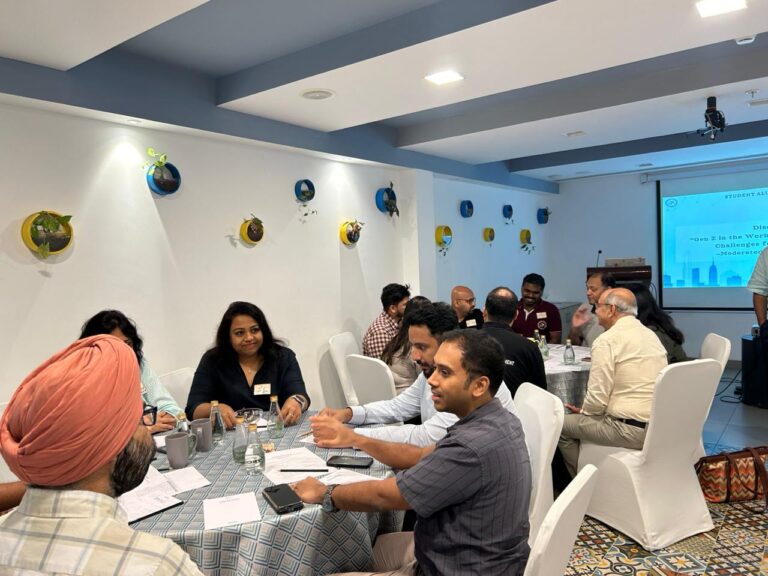
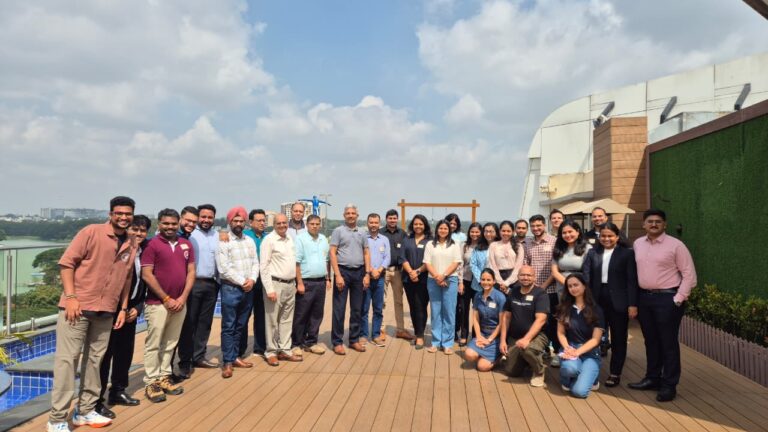
These were some of the questions explored at the GIM Alumni – HR Meet (Bangalore Chapter), where HR leaders from batches spanning 1998 to 2025 came together to discuss one defining theme: Gen Z in the workforce — and what it means for organisations and management education.
Understanding Gen Z Beyond Stereotypes
The alumni consensus was clear; Gen Z is not “difficult,” but distinctly different. They are:
Unlike previous generations that prioritised stability and security, Gen Z professionals often seek fulfilment, flexibility, and meaning. Many alumni pointed to what they termed the “safety net factor” — growing up with greater economic cushioning has influenced career risk appetite and expectations around work–life balance.
At the same time, Gen Z employees are task-oriented and efficient, shaped significantly by the COVID-era shift to remote and KPI-driven performance. However, this results-focused mindset sometimes comes at the cost of deeper organisational alignment or long-term perspective.
Where Workplace Friction Emerges
One of the most engaging discussions centred around communication psychology. In multi-generational teams, misunderstandings frequently arise not from intent, but from interpretation. A short “sure” over chat may be read as sarcasm. A brief response might be perceived as disengagement. Emojis — once informal — now carry layered professional meaning.
Alumni highlighted that these micro-level communication gaps often create disproportionate friction.
Other tension points include:
Yet, the alumni emphasised that this is not an “us versus them” dynamic. It is a generational transition moment requiring adaptation on both sides.
What This Means for Management Education
The most powerful part of the discussion was not diagnosing Gen Z, but asking how institutions like GIM must evolve. Several clear recommendations emerged as follows:
Gen Z learners prefer immersive, participative environments over lecture-heavy formats. Simulations, live projects, field immersion, and real-world exposure create deeper engagement.
With AI tools now embedded in student workflows, evaluation must shift from information recall to application, interpretation, and critical thinking — assessing insight “a level below AI outputs.”
Students should be prepared for diverse workplace realities through structured exposure to generational psychology, behavioural dynamics, and communication nuance.
Alumni proposed introducing modules within HR and organisational behaviour that focus on:
a) Generational psychology
b) Digital communication awareness
c) Empathy and interpersonal intelligence
d) AI–human collaboration
e) Industry co-created workshops
Young alumni can offer real-time industry insights to faculty through structured listening programmes and reverse mentoring. Senior alumni, meanwhile, can contribute as guest faculty, research collaborators, and members of programme governance councils. The emphasis was clear: academic rigour must remain strong, but formats must evolve.
Strengthening the Industry–Academia Bridge
The meet reinforced GIM’s unique strength — a deeply engaged alumni network willing to shape the institution’s future.
Insights from the session will inform curriculum conversations within the HR & OB area. Alumni were invited to contribute through guest lectures, workshops, research collaborations, and governance participation.
The event also saw near-complete attendance among registered alumni, reflecting the strength of the GIM community and its commitment to remaining actively involved in academic evolution.
"Every new generation reshapes the workplace. The responsibility of institutions and organisations is to understand the shift and prepare for it."
Dr. Sneha Bhat
Assistant Professor - GIM