Posted by
-
Workshop
-
Summer Research Internship Program (SRIP)
-
Summer Internship Program
-
SLRI
-
SEE Learning
-
QS Rankings
-
Project
-
Pre-Placement Offer (PPO)
-
phd
-
pgdm bda
-
Opportunities
-
nova sbe
-
MDP
-
Marketing
-
IDA
-
Goa Institute of Management
-
GiveGoa
-
GIM Alumni
-
fpm non residential
-
Fpm
-
Executive fpm
-
Event
-
Dual Degree Programmes
-
Dual Country
-
Dr. Hanish Rajpal
-
Doctoral
-
CSSA
-
CPPG
-
Convocation
-
Conference
-
Co-LIFE
-
CHSDM
-
Campus Placement
-
BIFS
-
Alumni Success Stories
-
Alumni Reunions
-
Alumni Relations
-
Alumni Office
-
Alumni meet
-
Alumni Impact
-
Alumni Events
-
Alumni Engagement
-
Alumni
-
Admissions
-
achievement
-
#pgdm
-
#mba
Date
Co-LIFE — A Global Collaboration to Shape Sustainable Entrepreneurs
Share this blog


When ideas cross borders, innovation accelerates. That was the spirit behind Co-LIFE — Co-designing Learning for Impact-focused Entrepreneurship — a three-year international partnership funded by the European Commission under the Erasmus+ Capacity Building for Higher Education Institutions.
Started in January 2024, the consortium aims to deliver an accredited impact-focused entrepreneurship learning module with an innovative pedagogical approach, Learning by Developing (LbD), employing design thinking, service design, and co-creation methods. Co-LIFE focuses on fostering social inclusion, pursuing sustainable goals & improving intercultural relations, with the ultimate goal of effective exchange of best practices to build capacity for impact-focused entrepreneurs.
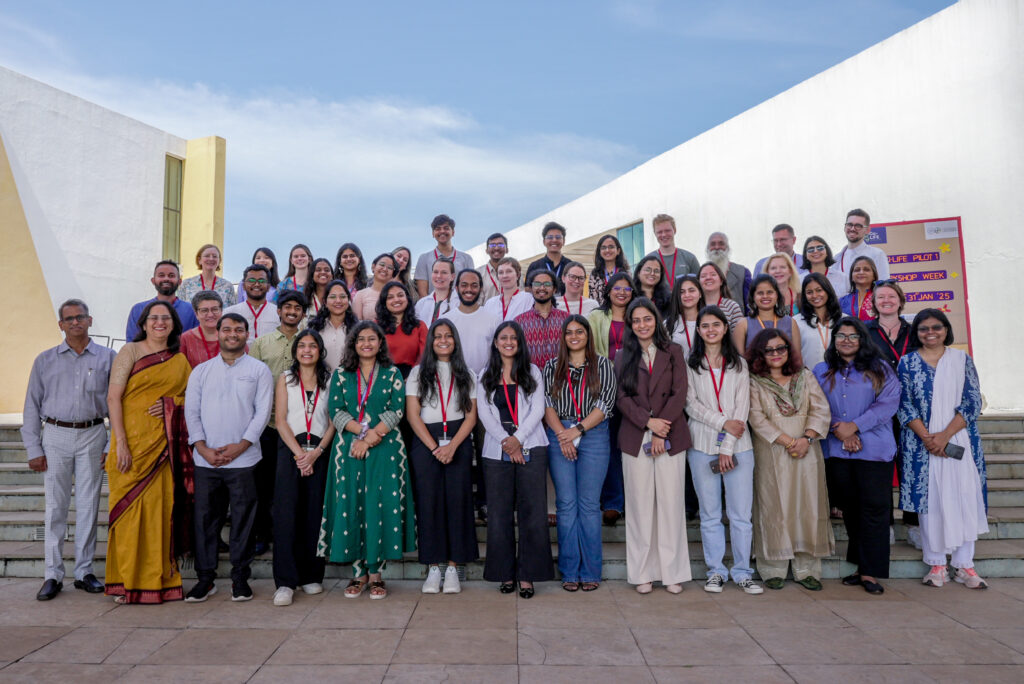
Consortium of HEIs from India and Europe
Unlike traditional entrepreneurship programmes, Co-LIFE is a living laboratory — a space where students, faculty, and industry experts co-create solutions to real-world challenges. The project is led by a consortium of eight partner institutions from India and Europe to shape the next generation of entrepreneurs who view sustainability not as a side note, but as the core of their business mission.
The eight academic institutions are:
- LAB University of Applied Sciences (Finland)
- Laurea University of Applied Sciences (Finland)
- Aarhus University – Department of Business Development and Technology (Denmark)
- Thomas More University (Belgium)
- Goa Institute of Management (India)
- Arch College of Design and Business (India)
- École Intuit Lab (India)
- Indian School of Development Management (India)
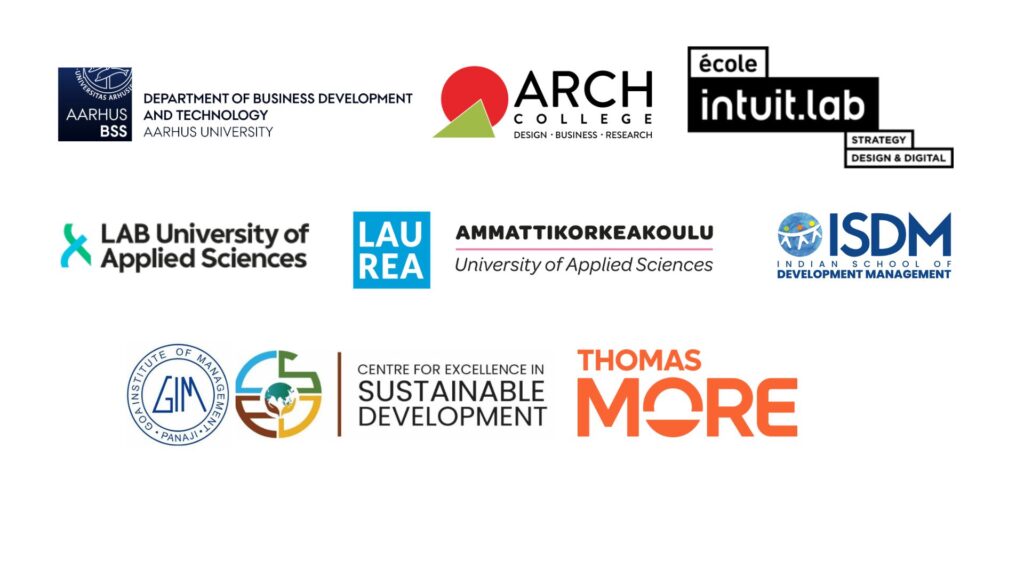
{Partner institutions of Co-LIFE}
Each partner brings unique capabilities — from curriculum design and research to industry connections — ensuring participants gain both global perspective and local insight. The consortium’s diversity is its strength, blending European expertise in green innovation with India’s ingenuity in frugal, scalable solutions.
"We are delighted to be part of the Co-Life project, through which we’ll be able to develop curricula and learning materials that can be used by faculty across institutions globally."
Prof. Ajit Parulekar
Director, GIM
Pilot Week of Co-LIFE at GIM
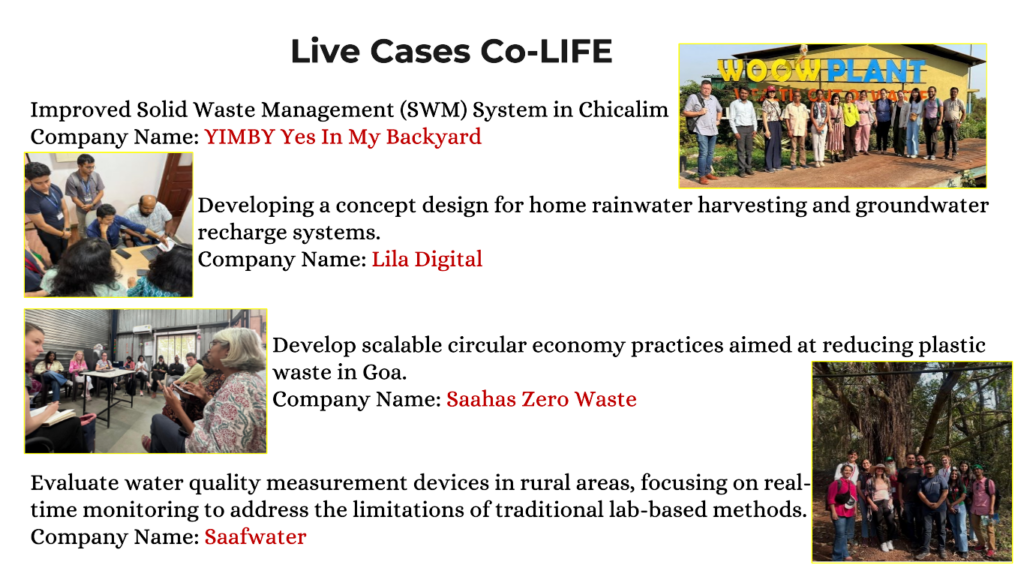
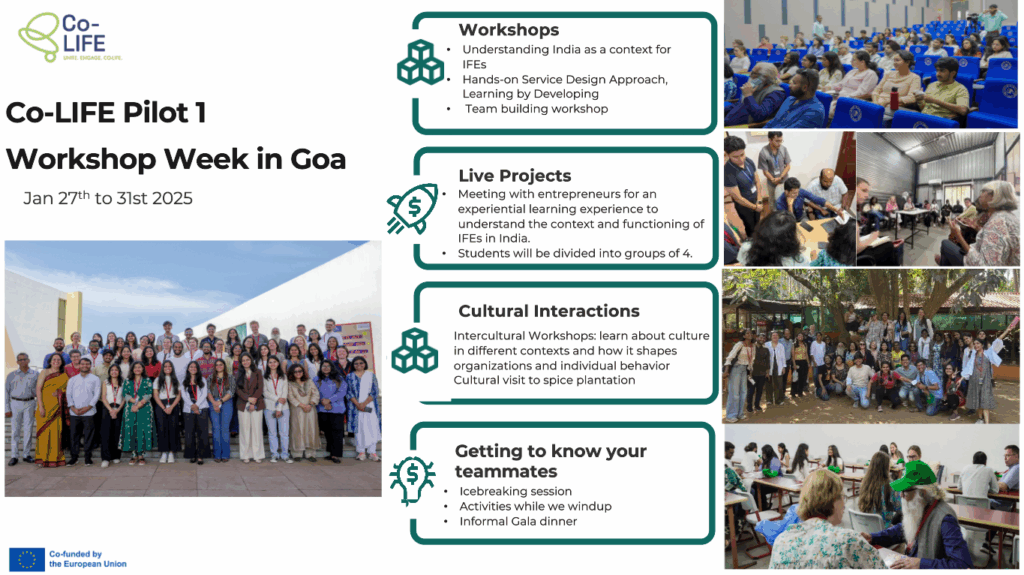
On 27th January 2025, Goa Institute of Management hosted Pilot Week 1, bringing the Co-LIFE experience to life on its campus. The week featured an official inauguration, speed-date introductions, campus tours, and contextual sessions on India’s socio-economic landscape. Participants engaged in yoga sessions, intercultural workshops, and field visits to four impact-focused enterprise sites across Goa. They also attended an international roundtable discussion, design-thinking and LbD workshops, and guided team research-planning sessions. During the pilot week, students also worked on live cases with entrepreneurs in Goa, which aimed at addressing mass issues such as food waste reduction.
The centrepiece of the Pilot 1 Week was an International Round Table on “Impact-Focused Entrepreneurship: Fueling the Transition to a Sustainable Future”, which drew 70 participants — from college faculty and industry experts to sustainability practitioners from across sectors. The discussions explored entrepreneurship’s role in addressing climate change, advancing the circular economy, and reducing inequality — all while building profitable, resilient businesses.
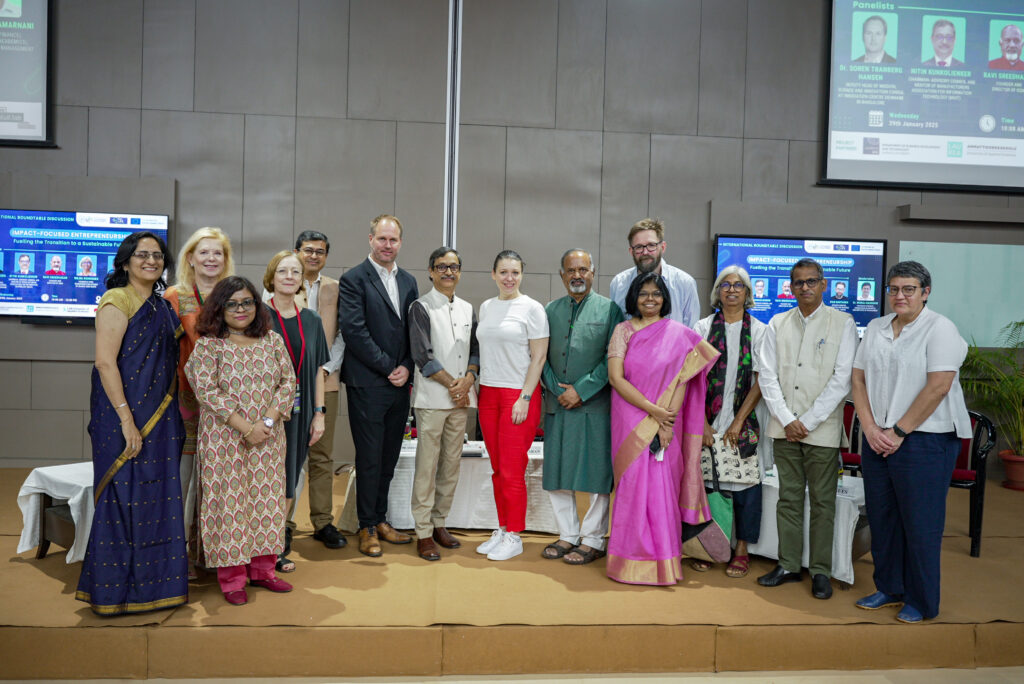
(Esteemed speakers included Dr. Søren Tranberg Hansen, Deputy Head of Mission Science and Innovation Consul at Innovation Center Denmark, Bangalore; Nitin Kunkolienker, Chairman, Advisory Council and Mentor at MAIT, Delhi; Ravi Sreedharan, Founder and Director of ISDM; Wilma Rodrigues, Founder & Chief Transformation Officer of Saahas Zero Waste; and Pasi Rantanen, Advisor & Mentor in Innovation and Business Strategy at Ikigaia.)
Pilot 2 will take place in Jaipur (January 2026) and New Delhi (March 2026), wherein six students from GIM will be selected to work alongside students from diverse disciplines and cultures.
Empowering Educators through International FDP
During the Workshop week, GIM’s Centre for Excellence in Sustainable Development (CESD) rolled out the International Faculty Development Program (FDP) — an eight-month initiative designed to help educators integrate sustainability and impact-focused entrepreneurship into their teaching. This is a part of the Co-LIFE project work package on training the trainers and is led by GIM.
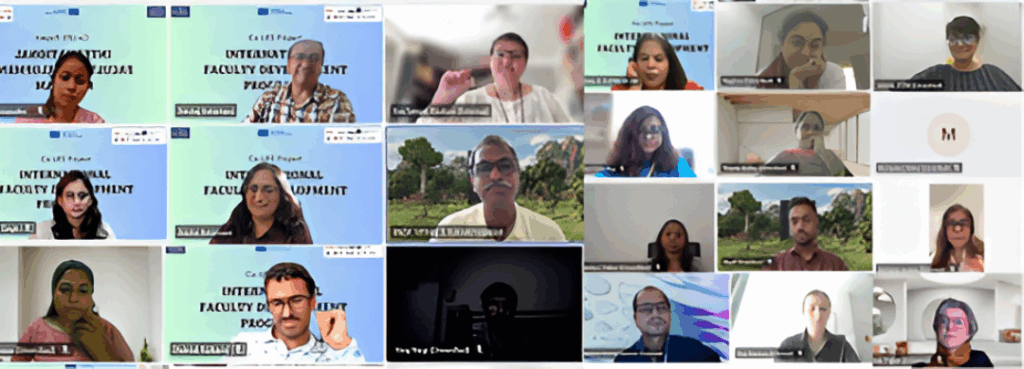
Spanning four modules, the FDP blends international roundtables, teaching pedagogies, and online workshops that focus on Experiential Learning and LbD for Impact Focused Entrepreneurship; culminating in certifications from partner institutions. The goal: to equip faculty with tools to inspire the next wave of changemakers by fostering impact-focused entrepreneurship.
FDP Modules:
1. International roundtable discussion (January 2025)
2. Online workshop (April 2025)
3. Teaching with cases and activity-based pedagogy (May 2025)
4. Service design and design thinking (October 2025)
Selection of Next Generational Entrepreneurs
The programme’s first selection at GIM drew 83 applicants for the Impact-Focused Entrepreneurship Certificate Course. Through group exercises, interviews, and a Statement of Purpose video round, six students were chosen to join the inaugural cohort.
Leading the initiative at GIM is Dr. Arpita Amarnani, with co-investigators Dr. Diya Guha Roy and Prof. Vithal Sukhathankar. Together, they’re ensuring GIM’s role in Co-LIFE goes beyond participation — shaping curriculum, facilitating collaborations, and making an impact.
"Co-LIFE is proof that sustainability thrives when knowledge, cultures, and entrepreneurial spirit converge. By uniting future leaders from around the world, the initiative has created a vibrant platform for turning bold ideas into lasting, real-world impact."
Prof. Arpita Amarnani
Chairperson of Centre for Excellence in Sustainable Development