Tags
Posted by
-
year PGDM program
-
Workshop
-
Top PGDM Colleges in India
-
Top Business Schools in India
-
Summer Research Internship Program (SRIP)
-
Summer Internship Program
-
Student Exchange Programs in PGDM
-
Student Exchange Eligibility
-
soft skills for placement
-
SLRI
-
skills for campus placement
-
SEE Learning
-
Regular PGDM
-
QS Rankings
-
Python for Data Analysis
-
Project
-
professional courses after graduation
-
Pre-Placement Offer (PPO)
-
Power BI vs Tableau
-
Postgraduate Diploma in Management
-
placements
-
placement tips for students
-
Placement
-
phd
-
PGDM with Dual Specialization
-
PGDM vs Executive MBA
-
PGDM syllabus
-
PGDM specializations
-
PGDM Specialization
-
PGDM placements
-
PGDM in Data Analytics
-
PGDM in Banking
-
PGDM full form
-
PGDM For Working Professionals
-
PGDM eligibility
-
PGDM Courses
-
PGDM course duration
-
PGDM course details
-
PGDM course
-
PGDM Career Switch
-
PGDM Career Scope
-
PGDM Career Opportunities
-
pgdm bda
-
PGDM Banking and Finance
-
PGDM After Graduation
-
PGDM admission
-
PGDM
-
Opportunities
-
Online PGDM vs Regular PGDM
-
Online PGDM
-
nova sbe
-
MDP
-
MBA vs PGDM
-
MBA in Data Analytics
-
Marketing
-
Management Courses
-
Management Colleges in India
-
JAIIB certification
-
Investment Banking Career
-
International Student Exchange
-
Insurance Jobs in India
-
Insurance Career Growth
-
IDA
-
HCM
-
Goa Institute of Management
-
Global Exposure in PGDM
-
GiveGoa
-
GIM Alumni
-
GIM
-
FRM certification
-
fpm non residential
-
Fpm
-
Finance Management Course
-
Finance Jobs
-
Finance Career Options
-
Executive MBA
-
Executive fpm
-
Event
-
est courses after graduation in India
-
Dual Specialization PGDM
-
Dual Degree Programmes
-
Dual Country
-
Dr. Hanish Rajpal
-
Doctoral
-
Data Science Career
-
Data Science
-
Data Analytics PGDM
-
Data Analytics Careers
-
Data Analytics
-
CSSA
-
CPPG
-
courses after graduation for high salary
-
courses after graduation
-
Corporate Finance Jobs
-
Convocation
-
Conference
-
Co-LIFE
-
Clubs
-
CHSDM
-
Career Switch After Graduation
-
Career Opportunities in Banking and Finance
-
Career in Data Analytics
-
Career After PGDM
-
campus placement preparation
-
Campus Placement
-
Business Analytics vs Data Science
-
Business Analytics Tools
-
Business Analytics
-
Big Data Analytics
-
BIFS
-
BFSI Career Opportunities
-
Best PGDM Colleges India
-
Best PGDM Colleges in India
-
Banking vs Insurance Salary
-
Banking vs Insurance Career
-
Banking Jobs in India
-
Banking courses after graduation
-
Banking certification courses
-
Banking Career Growth
-
Banking and finance courses
-
Banking and Finance Course
-
Alumni Success Stories
-
Alumni Reunions
-
Alumni Relations
-
Alumni Office
-
Alumni meet
-
Alumni Impact
-
Alumni Events
-
Alumni Engagement
-
Alumni
-
AIM2Flourish
-
Admissions
-
achievement
-
6. Career Growth After PGDM
-
2 year PGDM program
-
1 year vs 2 year PGDM
-
#pgdm
-
#mba
Date
Project SHIELD – Digital Frauds Awareness Workshop
Share this blog


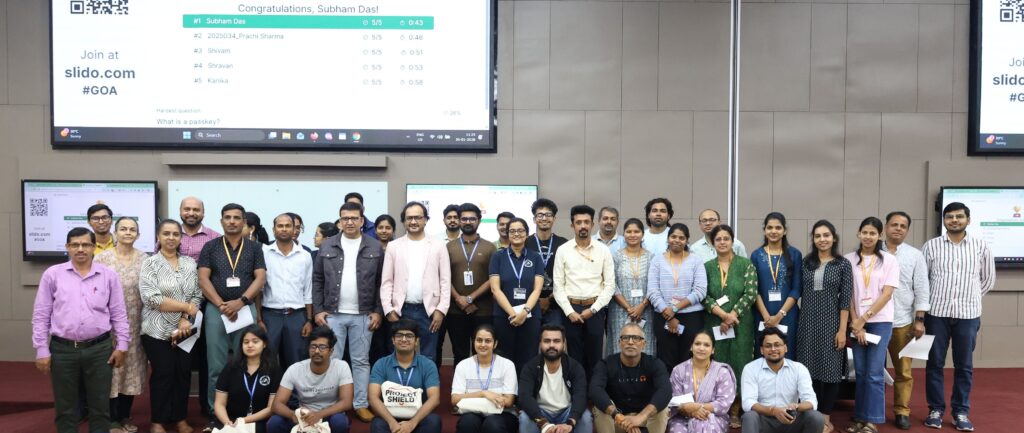
Goa Institute of Management hosted Project SHIELD, an awareness workshop conducted by India Today Group on 30th January 2026, as part of its national initiative to combat rising cases of digital fraud and cybercrime. The session aimed to educate young adults on the methods used by cyber scammers, the psychological tactics behind frauds, and practical steps to safeguard personal and financial data in an increasingly digital world. The workshop was designed as an interactive, discussion-driven session, moving away from a conventional lecture format to actively engage participants through real-life stories, live demonstrations, quizzes, and question-and-answer interactions.
Session Overview and Flow
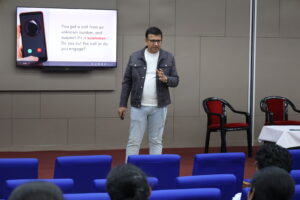
The workshop was conducted by an India Today cyber expert, who drew from investigative research and real scam cases encountered across India. The speaker began by gauging students’ familiarity with scam calls and online fraud, initiating a discussion on whether one should engage with or immediately disconnect scam calls.
The session unfolded across four broad themes:
• Understanding how scams work
• Recognising scammer psychology
• Digital hygiene and data protection
• Awareness tools and preventive practices
Understanding Scams and Scammer Behaviour
Participants were introduced to the evolving nature of scams, with emphasis on how scammers reinvent themselves every few months. Examples discussed included:
• Fake calls claiming to be from police or investigative agencies (CBI, cyber cell)
• “Digital arrest” threats
• KYC update frauds
• Lottery and lucky draw scams (e.g., fake KBC messages)
• Emergency WhatsApp messages impersonating friends or relatives
A key insight shared was that scammers do not target everyone; instead, they aim for the small percentage of individuals who panic, hesitate, or comply under pressure.
Psychology of Scammers
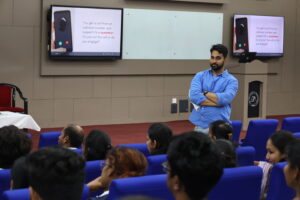
The speaker highlighted common psychological triggers used by fraudsters:
• Fear: Threats of legal action, arrest, or account suspension
• Greed: Unrealistic rewards like “double your money” schemes
• Authority: Pretending to be police officers or government officials
• Trust and Emotion: Posing as friends or relatives in emergencies
Students were encouraged to cross-question callers confidently, asking simple factual questions such as:
• Official designation and office address
• Name of organisation head
• Jurisdiction or department details
Such questioning often exposes scammers as they rely heavily on scripts and lack factual depth.
Data Security and Digital Hygiene
A major portion of the workshop focused on protecting personal data, particularly in cases of phone theft or data breaches.
Key recommendations included:
• Prioritising data security over device recovery when a phone is lost
• Locking sensitive apps (WhatsApp, gallery, email, banking apps)
• Enabling two-factor authentication (2FA)
• Using password managers such as Google Password Manager or 1Password
• Avoiding common passwords using names, dates of birth, vehicle numbers, or relationships
• Using fake email IDs and dates of birth for non-critical services
The speaker also advised participants to:
• Keep extremely sensitive passwords offline (e.g., written in a secure diary)
• Avoid saving all passwords in browsers
Data Breaches and Card Safety
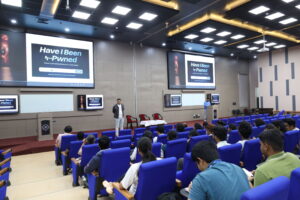
Students were introduced to the website “Have I Been Pwned”, which allows users to check whether their email IDs have been involved in known data breaches. A live demonstration reinforced the scale and inevitability of data leaks, even from trusted platforms.
Regarding card security, critical warnings included:
• Most international transactions do not require OTP or PIN, only CVV
• Blocking or limiting international transactions via banking apps
• Covering or scratching out CVV numbers after memorising them
• Never handing over cards or devices out of sight during transactions
The session explained India’s SMS header classification system, which helps distinguish genuine messages:
- G – Government
- S – Service-related
- T – Transactional
- P – Promotional
This practical insight enabled participants to quickly assess whether a message is likely legitimate, spam, or potentially fraudulent.
Interactive Quiz and Engagement
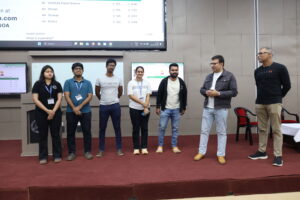
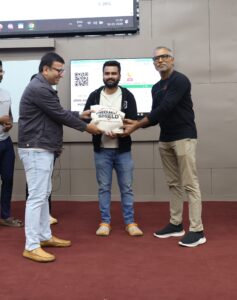
The workshop concluded with a live quiz hosted via Slido, where participants answered five scenario-based questions related to scams and online safety. The quiz tested real-time decision-making and reinforced key learnings. The fastest and most accurate participants were rewarded with India Today merchandise, adding a competitive and engaging element to the session.
Key Takeaway and Message
In the closing remarks, the speaker emphasised that while students are often digitally aware, parents, grandparents, and other family members remain vulnerable. Participants were urged to act as knowledge multipliers, sharing learnings with their families and social circles.
The session underscored that:
• Financial losses due to scams are often irreversible
• Panic is the scammer’s strongest weapon
• Awareness and calm decision-making save both money and emotional distress